Football is one of the most exciting sports in the world, but for beginners, it can also feel a little overwhelming at first. You watch professional players dribble effortlessly, pass with pinpoint accuracy, and score goals like it’s second nature, and you may wonder, “How do they make it look so easy?” The truth is, every great footballer started as a beginner. The difference between an average player and a confident one is not talent alone, it’s consistent training through the right drills. Football training drills help beginners develop the core skills needed to play better, such as ball control, passing, shooting, speed, balance, and decision-making. If you want to improve quickly, you don’t need fancy equipment or professional coaching right away. What you need is a structured set of simple drills that build your foundation step by step.
- Why Beginners Should Start with Simple Football Drills
- What Equipment Do You Need for Football Practice?
- 1. Basic Dribbling Drill (Close Ball Control)
- 2. Cone Weaving Drill (Ball Control and Direction Change)
- 3. Wall Passing Drill (First Touch and Accuracy)
- 4. Short Passing Partner Drill
- 5. Shooting Drill for Beginners (Target Practice)
- 6. First Touch Control Drill
- 7. Juggling Drill (Ball Familiarity)
- 8. Speed and Sprint Drill (Explosiveness Training)
- 9. Agility Drill (Quick Feet and Balance)
- 10. Small-Sided Practice Game Drill
In this complete guide, we will cover the best football training drills for beginners, including dribbling drills, passing drills, shooting practice, agility workouts, and even a weekly training plan. Whether you are training alone at home or practicing with friends, these drills will help you become a stronger, smarter, and more confident football player.
Why Beginners Should Start with Simple Football Drills
When you are new to football, the most important thing is building the basics correctly. Many beginners make the mistake of trying advanced tricks or focusing only on scoring goals. But football is a complete game, and improvement comes from mastering simple skills first. Training drills are designed to develop muscle memory, which means your body learns how to control the ball naturally without you overthinking every movement. The more you repeat basic drills, the more automatic your touches, passes, and movements become.
Another reason drills are essential is that they help you improve faster in real match situations. In a game, you don’t have time to stop and think about how to pass or dribble. Everything happens quickly. Practicing drills prepares you for those moments, so you react faster and make better decisions. Simple football drills also reduce the risk of injury because they teach correct movement patterns, balance, and coordination.
Most importantly, training drills build confidence. Beginners often feel nervous on the pitch, but when you know the best football training drills you have practiced the basics, you play with more freedom and enjoyment.
What Equipment Do You Need for Football Practice?
One of the best things about football is that you don’t need much to start training. Even as a beginner, you can practice almost anywhere with minimal equipment.
Here are the basics:
- A good football (size 4 or 5 depending on your age)
- Cones or markers (you can use water bottles if cones aren’t available)
- Comfortable football shoes or trainers
- A wall or rebound surface for solo passing drills
- Optional agility ladder for footwork training
- A small goal or target area for shooting practice
That’s it. With just a ball and a little space, you can begin improving every day.
Best Football Training Drills for Beginners
Now let’s get into the most effective and best football training drills for beginners. These drills focus on the most important skills every player needs: dribbling, passing, first touch, shooting, speed, and agility.
1. Basic Dribbling Drill (Close Ball Control)
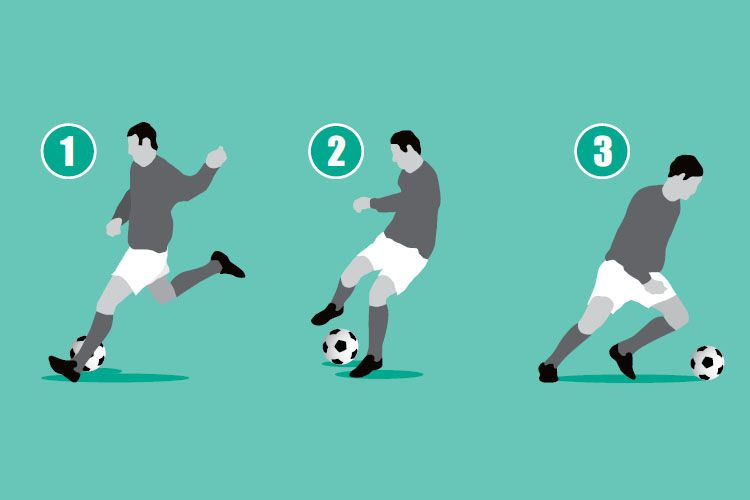
Dribbling is one of the first skills every beginner should learn because football is all about controlling the ball while moving. The goal of close control dribbling is to keep the ball near your feet, so you can change direction quickly and avoid losing possession.
To do this drill, start by jogging slowly with the ball at your feet. Use small touches with the inside of your foot rather than kicking the ball far ahead. Focus on keeping your head up occasionally instead of always looking down. This will help you become more aware of your surroundings during matches.
Beginners often make the mistake of taking heavy touches, which causes the ball to roll away. Instead, keep the touches light and controlled. Practice this drill for 10 minutes daily, and you will notice improvement quickly.
2. Cone Weaving Drill (Ball Control and Direction Change)
The cone weaving drill is one of the best dribbling exercises for beginners because it teaches you how to control the ball while changing direction. This is a key skill when trying to beat defenders.
Set up 5 to 8 cones in a straight line, spaced about one meter apart. Start dribbling through them using gentle touches. Move the ball from side to side with the inside of your foot. As you improve, try using both feet and increasing your speed.
This drill improves coordination, balance, and agility. It also teaches you how to stay calm while dribbling in tight spaces.
3. Wall Passing Drill (First Touch and Accuracy)
If you want to improve passing quickly, the wall passing drill is perfect. It is one of the best solo football drills for beginners because it allows you to practice anytime without a partner.
Stand a few feet away from a wall and pass the ball against it using the inside of your foot. When the ball rebounds, control it with your first touch and pass again. Focus on accuracy and proper technique rather than power.
As you improve, increase the distance or use one-touch passing. This drill will improve your passing, first touch, and reaction time.
4. Short Passing Partner Drill
If you have a friend or teammate, practicing short passes together is extremely valuable. Passing is the foundation of football, and beginners must learn how to pass correctly before attempting long balls.
Stand about 5 to 10 meters apart and pass the ball back and forth. Use the inside of your foot and aim for your partner’s feet. Focus on good communication and controlling the ball before passing.
This drill teaches rhythm, teamwork, and consistency, which are essential for match performance.
5. Shooting Drill for Beginners (Target Practice)
Scoring goals is exciting, but beginners often shoot with poor technique. A good shooting drill focuses on accuracy first, not power.
Set up a small target area in the goal or against a wall. Start close and practice striking the ball with your laces (top of your foot). Keep your body over the ball to avoid shooting too high.
The key is repetition. Practice 20 to 30 controlled shots daily, and gradually increase distance as your confidence grows.
6. First Touch Control Drill
A great first touch separates good players from beginners. If you can control the ball smoothly, you will have more time to make decisions during a game.
For this drill, pass the ball against a wall and focus on cushioning it with your foot when it comes back. Try controlling it with the inside, outside, and sole of your foot.
A soft first touch keeps the ball close, while a heavy touch gives defenders an advantage. Practicing this drill regularly will dramatically improve your game.
7. Juggling Drill (Ball Familiarity)
Juggling is one of the best drills for developing ball control and confidence. Even though beginners find it difficult at first, it is worth practicing.
Start by dropping the ball and tapping it gently with your foot. Try to do 2 or 3 juggles before catching it. Over time, increase the number gradually.
Juggling improves coordination, touch, and comfort with the ball, which translates into better dribbling and control.
8. Speed and Sprint Drill (Explosiveness Training)
Football is not just about skill, it’s also about speed. Beginners should train short sprints because football is played in quick bursts rather than long-distance running.
Mark a distance of about 20 meters. Sprint at full speed, then walk back for recovery. Repeat 6 to 10 times.
This drill improves acceleration, stamina, and match fitness.
9. Agility Drill (Quick Feet and Balance)
Agility is crucial for changing direction quickly, defending, and attacking. Beginners can start with simple cone agility drills.
Set up cones in a zig-zag pattern and run through them quickly without the ball first. Then repeat while dribbling.
This drill improves footwork, balance, and control under pressure.
10. Small-Sided Practice Game Drill
One of the best ways for beginners to improve is by playing small-sided games like 3v3 or 5v5. These games give you more touches on the ball and force you to make decisions faster.
Small-sided games improve passing, movement, teamwork, and confidence. Even one session per week can boost your development.
Weekly Training Plan for Beginners (3–5 Days Routine)
Here is a simple weekly plan beginners can follow:
- Day 1: Dribbling drills + cone weaving
- Day 2: Passing drills + wall practice
- Day 3: Rest or light jogging
- Day 4: Shooting drills + first touch training
- Day 5: Speed and agility drills
- Weekend: Small-sided match practice
Consistency matters more than intensity. Even 30–45 minutes a day is enough for improvement.
Common Mistakes Beginners Make During Football Training
Many beginners train hard but still don’t improve because of common mistakes. Overtraining is one issue, as the body needs recovery. Another mistake is focusing too much on tricks instead of fundamentals. Beginners also skip warm-ups, which increases injury risk.
The biggest mistake is inconsistency. Training once a week won’t bring results. Improvement comes from regular repetition.
Tips to Improve Faster as a Beginner Football Player
If you want faster progress, train with both feet, not just your strong one. Watch professional matches to learn positioning and movement. Work on fitness alongside skill drills. Most importantly, stay patient and enjoy the process. Football improvement takes time, but every session makes you better.
FAQs
How many hours should a beginner train in football?
A beginner should train around 3 to 5 hours per week, focusing on quality practice rather than long sessions.
Can I learn football alone at home?
Yes, many drills like wall passing, dribbling, juggling, and shooting practice can be done solo.
Which drill improves dribbling the fastest?
Cone weaving drills combined with close control dribbling are the best for fast dribbling improvement.
How long does it take to get good at football?
With consistent training, beginners can see major improvement within 3 to 6 months.
Football is a game of skill, movement, and confidence, and the best way for beginners to improve is through simple, consistent training drills. By practicing dribbling, passing, first touch, shooting, speed, and agility regularly, you will build a strong foundation that helps you perform better in real matches. Remember, every professional player once started as a beginner, and progress comes from repetition, patience, and enjoyment.
Start with these football training drills today, stay consistent, and you’ll be amazed at how quickly your game improves.
Also Read : Spurs Dominate Thunder Again in Convincing 130–110 Win as Johnson and Castle Shine