First Buster | Global Auto News
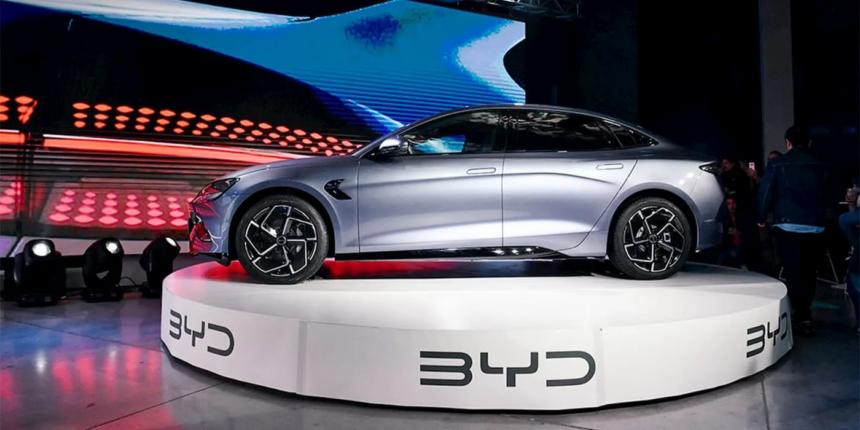
China’s electric vehicle giant BYD has officially overtaken Tesla to become the world’s largest electric car seller, marking a major turning point in the global EV industry. The development highlights the rapid rise of Chinese automakers and signals a shift in power within the fast-growing electric mobility market.
BYD’s surge comes on the back of strong domestic demand, aggressive global expansion, and a diversified product lineup that caters to both budget and premium buyers. While Tesla continues to dominate headlines and innovation narratives, BYD is quietly winning the numbers game.
How BYD Overtook Tesla
BYD’s rise is not sudden—it is the result of years of strategic planning and vertical integration. Unlike most EV manufacturers, BYD produces its own batteries, chips, and key components, allowing it to control costs and scale production efficiently.
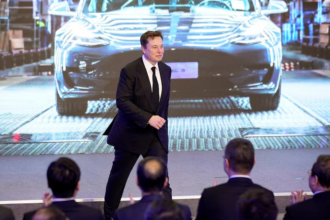
In contrast, Tesla has faced challenges including price wars, slowing demand in key markets, and increased competition, particularly in China—the world’s largest EV market.
Key factors behind BYD’s growth:
- Strong sales in China’s domestic market
- Competitive pricing across multiple EV segments
- Expansion into Europe, Southeast Asia, Latin America, and the Middle East
- Hybrid + fully electric vehicle offerings attracting a wider customer base
Tesla Still Leads in Profitability and Brand Power
Despite losing the top spot in global EV sales volume, Tesla remains a dominant force in terms of profitability, software innovation, charging infrastructure, and brand recognition.
Tesla’s focus on:
- Autonomous driving technology
- AI and software-based upgrades
- Premium global branding
continues to differentiate it from competitors. However, rising pressure from Chinese EV makers like BYD is forcing Tesla to rethink pricing, localisation, and product strategy.
What This Means for the Global EV Market
BYD surpassing Tesla is more than a headline—it reflects a broader shift toward China-led EV dominance. Chinese manufacturers are increasingly setting benchmarks in affordability, manufacturing efficiency, and supply chain control.
This development could have long-term implications:
- Increased competition leading to lower EV prices globally
- Faster EV adoption in emerging markets
- Pressure on Western automakers to innovate faster and reduce costs
The Road Ahead
As governments push for cleaner transportation and consumers shift away from internal combustion engines, competition between BYD and Tesla is expected to intensify. While Tesla may retain its leadership in technology and margins, BYD’s volume-driven strategy is reshaping the industry.
The global EV race is no longer just about innovation—it’s about scale, speed, and accessibility.