
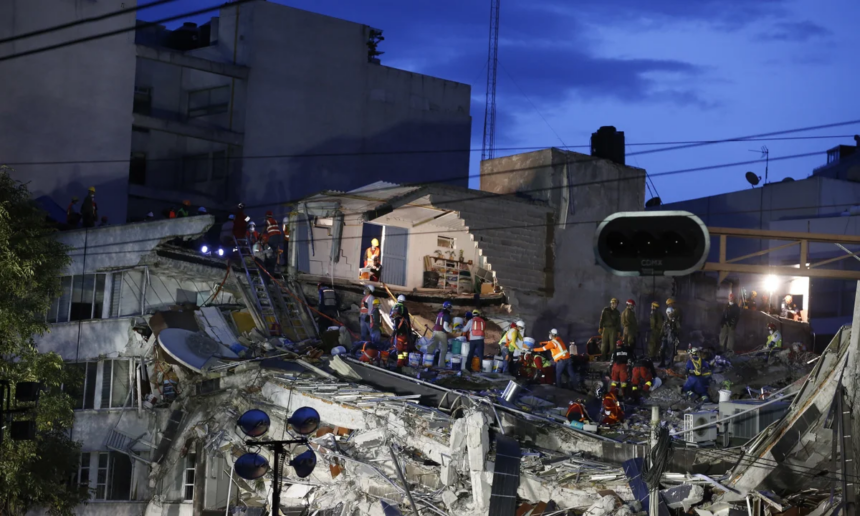
A powerful 6.5-magnitude earthquake shook Mexico City earlier today, sending shockwaves across the capital and triggering emergency evacuations in several areas. The tremor was felt across multiple neighbourhoods, causing buildings to sway and residents to rush outdoors as seismic alarms sounded throughout the city.
Mexico City, which sits on a highly active seismic zone, has a long history of earthquakes. While initial reports suggest no immediate large-scale damage, authorities have launched inspections and urged citizens to remain alert for possible aftershocks.
What Happened: Earthquake Details
According to preliminary seismic data:
- Magnitude: 6.5
- Region Affected: Mexico City and surrounding areas
- Depth: Moderate (exact depth under review)
- Time: Daytime hours, when offices and schools were active
The earthquake was strong enough to be felt widely, particularly in high-rise buildings, where occupants reported noticeable swaying lasting several seconds.
Mexico City’s Seismic Alert System Activated
Mexico City’s early warning seismic system was activated moments before the strongest shaking, giving residents a short but critical window to evacuate buildings.
- Offices temporarily shut down
- Public transport experienced brief pauses
- Schools followed emergency protocols
- Crowded areas saw controlled evacuations
Emergency services were deployed immediately to assess structural integrity across the city.
Public Reaction and Ground Reports
Social media platforms were quickly flooded with videos showing:
- People standing outside residential buildings
- Office workers evacuating calmly
- Furniture shaking inside apartments
- Seismic alert sirens echoing through streets
Many residents described the quake as “strong but brief,” noting that memories of past devastating earthquakes heightened anxiety during the tremor.
Damage Assessment and Safety Update
As of the latest updates:
- No confirmed fatalities reported
- No major building collapses identified
- Minor structural cracks reported in a few areas
- Power and communication systems remain operational
Authorities continue to inspect older buildings and high-risk zones to ensure public safety.
Why Earthquakes Are Common in Mexico City
Mexico lies along the Pacific Ring of Fire, one of the world’s most active seismic regions. Earthquakes occur due to tectonic plate movements, particularly involving the Cocos Plate and the North American Plate.
Mexico City is especially vulnerable because it is built on ancient lakebed sediments, which can amplify seismic waves and increase shaking intensity.
What To Do After an Earthquake
Authorities have advised residents to:
- Stay alert for aftershocks
- Avoid damaged structures
- Check gas and electrical connections
- Follow official updates only
- Keep emergency kits ready
Residents are also encouraged to report any visible damage to local authorities.
Conclusion
The 6.5-magnitude earthquake serves as a reminder of Mexico City’s ongoing seismic risk. While today’s quake did not result in major damage, officials stress the importance of preparedness, quick response, and public awareness.
Emergency teams remain on standby, and further updates will be issued as inspections continue.
FAQs
Was the earthquake felt outside Mexico City?
Yes, tremors were reported in nearby regions as well.
Is a stronger aftershock expected?
Aftershocks are possible, though usually weaker than the main quake.
Did the seismic alert work effectively?
Yes, the alert system provided advance warning in many areas.
Publisher Note
This report is part of First Buster’s commitment to delivering fast, accurate, and responsible breaking news.