By First Buster Sports Desk
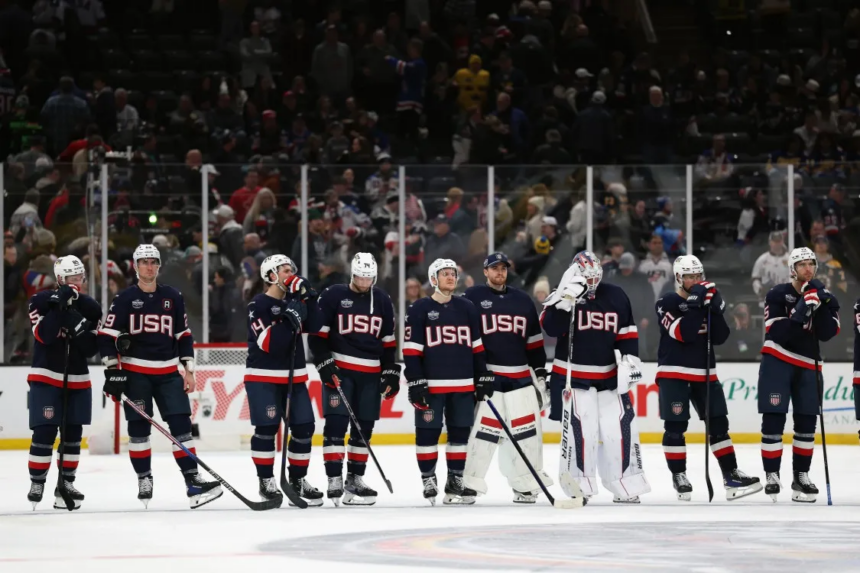
As preparations intensify for the upcoming Winter Olympics, USA Hockey has signalled a clear shift in strategy by building its projected Olympic roster around players who featured prominently in the recent 4 Nations Face-Off, while leaving out several high-profile NHL stars.
The move reflects a growing emphasis on chemistry, recent international experience, and system familiarity rather than reputation alone—a decision that has already sparked debate among fans and analysts across the hockey world.
4 Nations Face-Off Emerges as a Key Selection Benchmark
The 4 Nations Face-Off served as more than just an exhibition tournament for Team USA. Insiders suggest it has effectively become a testing ground for Olympic readiness, with coaching staff closely evaluating player adaptability, role discipline, and performance under international rules.
Many of the players who impressed during the tournament are now expected to form the backbone of the U.S. Olympic squad, particularly in key positions such as centre depth, defensive pairings, and special teams units.
According to sources close to the selection process, USA Hockey valued:
- Proven chemistry in short-format international play
- Defensive responsibility against elite global competition
- Willingness to play defined roles rather than star-driven hockey
High-Profile Omissions Raise Questions
While the roster direction highlights continuity, it also comes with surprises. Several well-known NHL names—players with strong regular-season numbers and leadership credentials—have been left out of the initial Olympic projection.
Among the most discussed omissions are Chris Kreider and Adam Fox, two players widely regarded as elite talents at their respective positions.
Though USA Hockey has not officially commented on individual exclusions, analysts believe the decisions may be influenced by:
- Recent international form over NHL-only performance
- Fit within the Olympic-style system
- Positional depth and redundancy concerns
The absence of such established stars underscores that Olympic selection is no longer guaranteed by reputation alone.
Coaching Philosophy: Systems Over Star Power
This roster approach aligns with a broader philosophy shift within USA Hockey—prioritising systems hockey over individual brilliance.
Olympic tournaments allow minimal preparation time, making pre-existing chemistry and tactical discipline critical. By selecting players who have already performed together in international settings, Team USA aims to reduce adaptation risks and accelerate on-ice cohesion.
A senior hockey analyst noted,
“This isn’t about talent shortage. It’s about building a team that can execute immediately. The Olympics don’t give you time to experiment.”
What This Means for Team USA’s Olympic Outlook
The U.S. has long faced criticism for underachieving on the Olympic stage despite deep talent pools. This new selection strategy suggests lessons have been learned from past campaigns, where star-heavy rosters struggled against more cohesive international opponents.
By leaning on a 4 Nations-tested core, USA Hockey appears focused on:
- Faster tactical execution
- Stronger defensive structure
- Balanced scoring across lines
If successful, this approach could redefine how future U.S. Olympic teams are built.
Final Roster Still Subject to Change
It’s important to note that the Olympic roster is not yet final. Injuries, form fluctuations, and NHL season developments could still influence final selections.
However, the message from USA Hockey is already clear: recent international performance matters, and no spot is guaranteed.
Fan Reaction and Ongoing Debate
Unsurprisingly, fans remain divided. While some applaud the merit-based approach, others argue that leaving out elite NHL stars could backfire in high-pressure knockout games.
As the Olympics draw closer, all eyes will remain on roster updates—and whether this bold, chemistry-first strategy delivers the long-awaited results for Team USA.