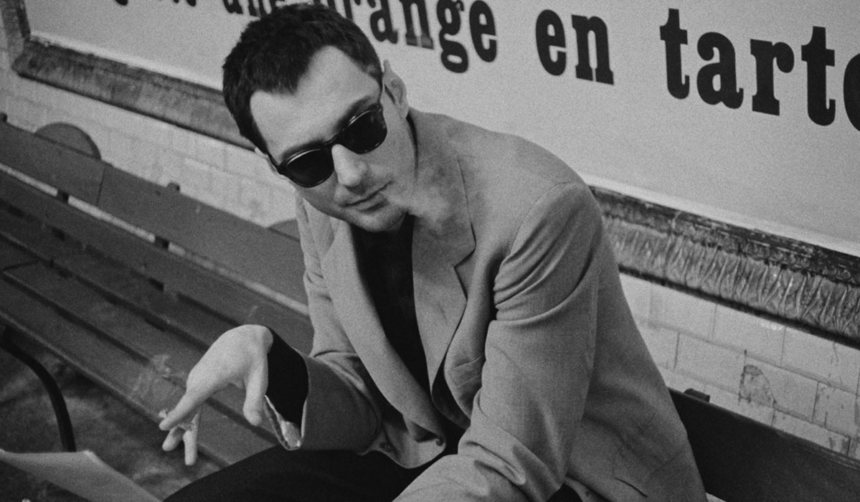
By First Buster Editorial Desk
The spirit of cinema has always been cyclical. Every generation rediscovers rebellion, minimalism, and truth on screen—only to reshape it for a new era. Today, as audiences grow restless with formula-driven blockbusters and algorithm-made stories, a familiar cinematic energy is quietly returning. And at the centre of this moment stands Guillaume Marbeck.
Much like the actors Jean-Luc Godard elevated during the Nouvelle Vague movement, Marbeck represents a shift—away from spectacle and toward presence. Not louder. Not bigger. Just truer.
A New Wave for a Restless Audience
The original Nouvelle Vague wasn’t about budgets or box-office numbers. It was about freedom—freedom from rigid scripts, polished performances, and studio expectations. Directors like Godard believed the camera should observe, not dominate.
Fast forward to today, and the cultural mood feels strikingly similar.
Audiences are gravitating toward:
- Intimate performances
- Naturalistic dialogue
- Imperfect but authentic storytelling
- Films that feel lived in, not manufactured
This is precisely where Guillaume Marbeck fits in.
Who Is Guillaume Marbeck — and Why Is Everyone Talking About Him?
Guillaume Marbeck’s recent rise isn’t the result of viral marketing or franchise backing. It’s coming from word of mouth, film festival circuits, and critics who sense something rare.
What sets him apart is not dramatic excess, but restraint.
- His performances feel observational, not performative
- Silence often speaks louder than dialogue
- The camera doesn’t chase him—he lets it find him
In an era dominated by hyper-edited content and short attention spans, Marbeck’s presence feels almost radical.
Cinema That Trusts the Viewer Again
One of the defining traits of Godard’s cinema was trust—trust that the audience would think, feel, and interpret for themselves. Today’s emerging filmmakers and actors influenced by this philosophy are reclaiming that trust.
Marbeck’s work aligns with this approach:
- No overexplaining emotions
- No forced arcs
- No artificial drama
Instead, moments unfold naturally, often leaving space for discomfort, ambiguity, and reflection. This is cinema that respects intelligence.
Why This Moment Matters for Film Culture
The renewed interest in Nouvelle Vague–style storytelling signals a broader shift in entertainment.
As streaming platforms flood audiences with endless content, viewers are beginning to crave:
- Depth over volume
- Meaning over momentum
- Artistry over optimisation
Guillaume Marbeck’s emergence isn’t just about one actor—it’s about a cultural correction.
The Close-Up Is Earned, Not Given
In Godard’s world, a close-up wasn’t just a framing choice—it was a declaration. It meant the character had earned the audience’s attention.
Marbeck appears to understand this instinctively.
He doesn’t demand the spotlight.
He doesn’t perform for it.
He waits.
And when the close-up arrives, it feels deserved.
What Comes Next?
Industry insiders suggest Marbeck is being approached for projects that prioritise:
- Director-driven storytelling
- International co-productions
- Character-first narratives
If that path holds, he may become one of the defining faces of this modern cinematic revival—an actor shaped not by trends, but by timeless principles.
Final Take from First Buster
Cinema doesn’t move forward by forgetting its past. It evolves by remembering why it mattered in the first place.
Guillaume Marbeck’s rise feels less like a debut and more like a continuation—a quiet reminder that great performances don’t shout.
They linger.
And in today’s noise-heavy media landscape, that may be the most disruptive move of all.